Introduction
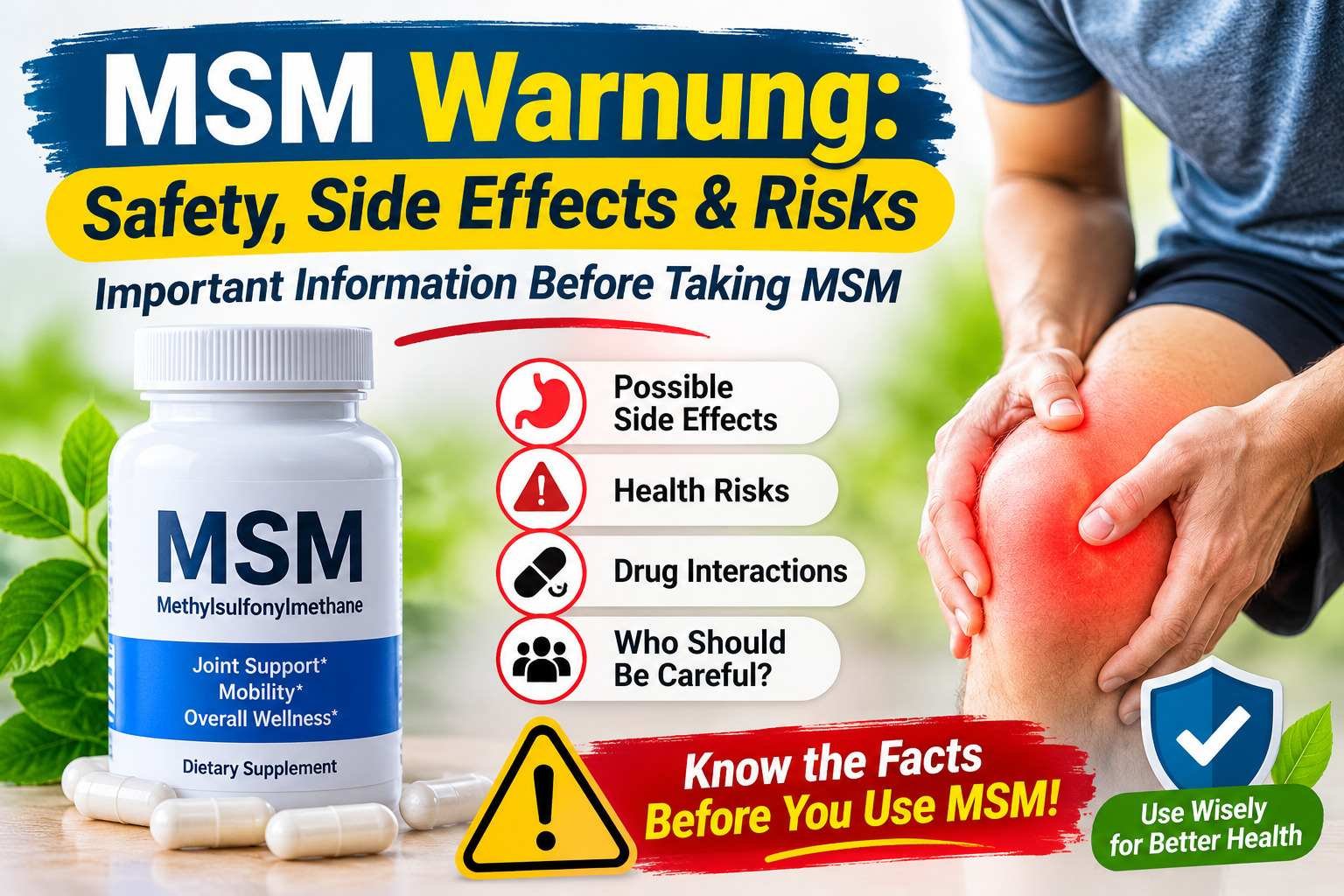
The keyword MSM Warnung refers to warnings and safety information surrounding MSM (methylsulfonylmethane), a naturally occurring sulfur-containing compound commonly sold as a dietary supplement. MSM has become popular among people interested in joint health, physical comfort, mobility, and general wellness. It is frequently marketed as an option for individuals experiencing joint stiffness or looking for additional nutritional support.
However, just because a supplement is widely available does not mean it is suitable for everyone. MSM products can differ in quality, concentration, formulation, and recommended serving sizes. People considering MSM should understand its potential benefits, possible side effects, safety concerns, and limitations before adding it to their daily routine.
In this guide, we explore the most important MSM warnings, explain who should exercise additional caution, and discuss how to make informed decisions about supplement use.
What Is MSM and Why Do People Take It?
Methylsulfonylmethane (MSM) is an organic sulfur-containing compound. Sulfur is an essential element involved in several biological processes, including the formation of certain proteins and structural components of the body.
MSM is available in different supplement forms, including:
-
Capsules and tablets
-
Powdered supplements
-
Liquid formulations
-
Combination products containing other ingredients
People commonly use MSM supplements for joint comfort, exercise recovery, and general wellness. Some products combine MSM with glucosamine, chondroitin, or other ingredients marketed for joint support.
Although MSM has attracted scientific interest, research into its effectiveness remains limited. It should not be considered a guaranteed treatment for joint conditions or a replacement for appropriate medical care.
MSM Warnung: Common Side Effects You Should Know
One of the most important reasons to understand an MSM warning is the possibility of unwanted side effects. Although short-term studies generally report reasonable tolerability, some individuals experience unpleasant reactions.
Reported side effects include:
-
Digestive discomfort: Some people experience nausea, bloating, stomach discomfort, or diarrhea.
-
Headaches: Headaches have occasionally been reported during MSM supplementation.
-
Skin reactions: Itching, rashes, and other skin-related symptoms may occur.
-
Sleep disturbances: Some individuals report difficulty sleeping.
-
Fatigue: Tiredness or unusual fatigue has been reported.
-
Allergic reactions: People who experience unusual allergic symptoms should stop using the product and seek medical advice.
Not everyone experiences these effects. However, persistent or unexpected symptoms should never be ignored. Severe allergic symptoms, including breathing difficulties or swelling of the face or throat, require immediate emergency medical attention.
Who Should Be Careful With MSM Supplements?
MSM supplements are not appropriate for everyone. Certain groups should receive professional medical guidance before considering products containing methylsulfonylmethane.
1. Pregnant and Breastfeeding Individuals
There is insufficient reliable scientific information establishing whether MSM supplementation is safe during pregnancy or breastfeeding. Therefore, individuals in these situations should avoid self-directed supplementation and discuss any proposed product with a qualified healthcare professional.
2. Children and Teenagers
An important MSM warning concerns younger individuals. Research on the safety of MSM supplements in children and teenagers is limited.
The Norwegian Scientific Committee for Food and Environment has highlighted that available evidence is insufficient to establish a safe daily intake for these age groups.
Consequently, MSM supplements should not be used by children or teenagers without appropriate professional medical guidance.
3. People With Existing Health Conditions
Individuals living with kidney or liver conditions should be particularly cautious because long-term safety information for these populations remains incomplete.
People with ongoing medical conditions should discuss supplement ingredients with their healthcare providers before considering additional products.
4. Individuals Taking Prescription Medicines
MSM is frequently included in combination supplements containing glucosamine, chondroitin, and other ingredients. Potential interactions may depend on the complete formulation rather than MSM alone.
People taking prescription medicines should ask a doctor or pharmacist to review the ingredients before using a new supplement.
Does MSM Interact With Other Medications?
Medication interactions are another important part of the MSM Warnung discussion.
Scientific information about interactions involving MSM alone remains limited. This means that the absence of a well-documented interaction should not automatically be interpreted as proof that combining MSM with every medication is safe.
Special attention is appropriate when reviewing combination products.
For example, glucosamine and chondroitin have been associated with concerns involving warfarin, a prescription blood-thinning medicine. Therefore, individuals taking anticoagulants should have combination supplements reviewed by a healthcare professional.
It is also sensible to discuss MSM-containing products with a pharmacist when taking several medicines regularly.
Is MSM Scientifically Proven to Support Joint Health?
MSM is commonly marketed for joint comfort, particularly among individuals interested in maintaining mobility and managing age-related joint concerns.
Some small clinical studies have investigated its potential effects on osteoarthritis symptoms. Researchers have explored whether MSM supplementation may help with discomfort, stiffness, and physical function.
However, the available evidence has important limitations.
Many studies involve relatively small groups of participants and short observation periods. Furthermore, some research evaluates MSM alongside glucosamine or chondroitin, making it difficult to identify the independent contribution of each ingredient.
The National Center for Complementary and Integrative Health (NCCIH) explains that research on MSM for osteoarthritis remains limited and does not establish whether it is effective.
Therefore, MSM should not be presented as a proven treatment or a replacement for established medical care.
How to Recognize a Poor-Quality MSM Supplement
Product quality is another consideration when evaluating MSM warnings. Dietary supplements can vary considerably in manufacturing standards, ingredient transparency, and quality control.
Consumers should pay attention to the following factors:
Unclear ingredient information: Products should provide transparent ingredient lists and identify additional substances included in the formulation.
Unverified quality claims: Statements such as completely risk-free, guaranteed results, or clinically proven benefits should be treated cautiously when supporting evidence is unavailable.
Missing manufacturer information: Reliable product labeling should identify the manufacturer and provide appropriate contact and product information.
Combination ingredients: Products containing multiple active ingredients require additional attention because each ingredient may have different safety considerations.
Misleading health promises: MSM should not be promoted as a cure for arthritis, chronic inflammation, or other medical conditions.
Choosing a product with transparent labeling and independent quality testing can help consumers make more informed decisions. However, quality certification does not guarantee that a supplement is suitable for every individual.
MSM Dosage: Why Individual Medical Guidance Matters
There is no universally established daily MSM intake that is appropriate for everyone.
Scientific studies have investigated different amounts and durations, but findings from short-term research should not be interpreted as a general recommendation for unrestricted use.
The Norwegian Scientific Committee for Food and Environment published a risk assessment highlighting concerns about certain daily MSM intakes. Its assessment also emphasized the lack of sufficient information to establish a safe intake for children and adolescents.
Rather than following recommendations from advertisements, social media, or supplement sellers, consumers should seek professional guidance.
A healthcare professional can consider age, medical history, existing medicines, and the complete supplement formulation before discussing potential use.
Natural Alternatives for Supporting Joint Health
People interested in maintaining joint health can also consider general wellness habits that do not depend on dietary supplements.
Some useful approaches include:
-
Balanced nutrition: Eating a variety of fruits, vegetables, whole grains, and protein-containing foods supports overall health.
-
Regular physical activity: Appropriate movement helps maintain mobility and general physical function.
-
Adequate sleep: Consistent sleep supports recovery and everyday well-being.
-
Hydration: Drinking sufficient fluids supports normal bodily functions.
-
Professional assessment: Persistent joint discomfort deserves proper evaluation rather than relying exclusively on supplements.
These habits support general health but do not replace treatment when a medical condition requires professional care.
Frequently Asked Questions About MSM Warnung
1. What does MSM Warnung mean?
MSM Warnung is a German search phrase meaning MSM warning. It commonly refers to safety concerns, possible side effects, interactions, and precautions associated with methylsulfonylmethane supplements.
2. What are the most common MSM side effects?
Reported side effects include nausea, bloating, diarrhea, headaches, fatigue, itching, and skin rashes. Not everyone experiences these symptoms.
3. Is MSM safe for everyone?
No. Available safety information is limited, particularly for children, teenagers, pregnant individuals, and breastfeeding individuals. Medical guidance is important before considering supplementation.
4. Can MSM interact with medications?
Reliable information about interactions involving MSM alone is limited. Combination products may introduce additional interaction concerns, so a doctor or pharmacist should review the complete ingredient list.
5. Does MSM help with joint pain?
Some small studies suggest possible improvements in osteoarthritis symptoms. However, current evidence is insufficient to establish MSM as a proven treatment for joint conditions.
6. Can MSM be taken every day?
Daily use should not automatically be considered safe for everyone. Appropriate use depends on individual circumstances, product formulation, and professional medical guidance.
7. Should teenagers use MSM supplements?
Safety research in children and teenagers is insufficient to establish a safe daily intake. Teenagers should not start MSM supplementation without appropriate medical guidance.
Conclusion: Understanding the MSM Warnung Before Making a Decision
Understanding the MSM Warnung is important for anyone researching methylsulfonylmethane and its potential role in joint health and general wellness. Although some research suggests possible benefits for osteoarthritis symptoms, the available scientific evidence remains limited, and long-term safety has not been fully established.
Potential side effects, uncertain medication interactions, product quality, and individual health circumstances all deserve attention. Pregnant and breastfeeding individuals, children, teenagers, and people with existing medical conditions should exercise particular caution. Professional medical guidance is preferable to relying on marketing claims or unsupported supplement recommendations. Ultimately, informed health decisions begin with reliable scientific information. By understanding both the potential limitations and safety concerns associated with MSM, readers can make more responsible choices about their overall well-being.
Medical Disclaimer: This article is intended for educational and informational purposes only. It does not replace professional medical advice, diagnosis, or treatment. Always consult a qualified healthcare professional regarding dietary supplements and individual health concerns.